The right rear axle stiffness is normally the standard or medium option recommended by your chassis manufacturer. Use that axle as your reference, then move only one grade softer or harder after you can describe the handling problem and where it happens in the corner.

What Does Rear Axle Stiffness Change on a Go Kart

A racing kart uses a solid rear axle, so both rear wheels rotate together. During a turn, the inside rear wheel travels a shorter distance than the outside wheel. The chassis must unload or lift the inside rear tire to prevent the two tires from fighting each other.
The axle works as part of the kart’s spring system. Changing its stiffness affects:
This is why an axle change can help in one part of a corner while making another part worse. The driver needs to report where the problem begins, not simply say that the kart needs more or less grip.
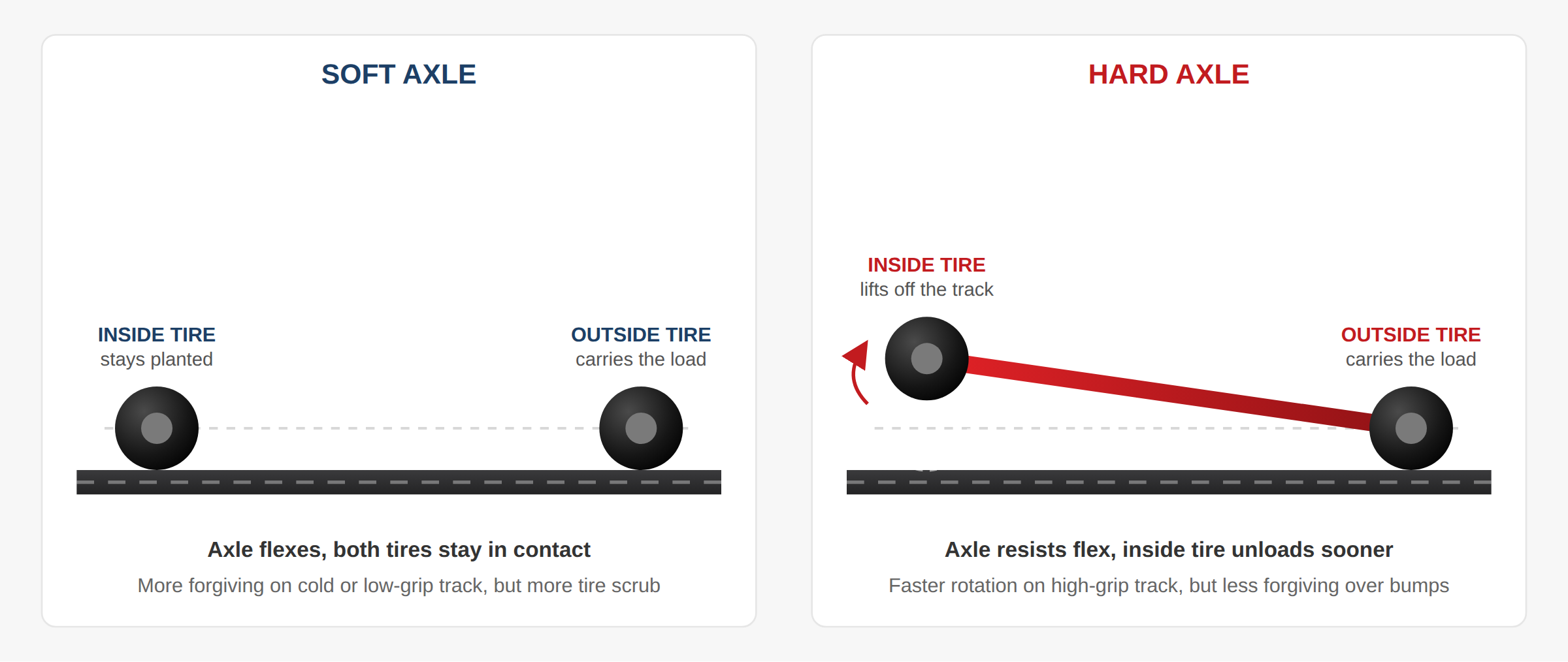
Comparison of soft, medium, and hard rear axle stiffness options for racing go karts

Figure 1. Simplified rear view of a kart’s rigid rear axle during cornering. With a soft axle, flex lets both tires stay planted. With a hard axle, the beam resists flex and the inside tire lifts off the track sooner, which speeds up rotation but transfers more load to the outside tire.

Soft vs. Medium vs. Hard Go Kart Axles

The effects below describe how the axle itself behaves. The correct tuning direction still depends on the frame, driver, tires, engine class, and chassis manufacturer.
Axle Stiffness How It Behaves Common Reason to Test It Possible Drawback
Soft
Deflects more under load
A light driver can’t work the rear of the kart, or the manufacturer recommends more rear flex
Too much flex can let the inside rear tire return early, causing binding or poor drive
Medium
Balanced flex and return
Establishing a dependable setup at a new track
May need adjustment when grip becomes unusually low or high
Hard
Deflects less, transfers more load into the tires
The chassis manual calls for a firmer rear response, or the current axle flexes beyond its working range
Can make the kart skate, hop, or take longer to produce grip when used in the wrong setup
A soft axle does not automatically create more grip, and a hard axle does not automatically free the rear. Some chassis use a harder axle on a slick track to put more energy into the tires. Other chassis use a softer axle to create the needed flex. High-grip conditions can produce the same disagreement between brands. Your chassis setup chart should decide the direction, and track testing should confirm it.

Read the Kart in Three Parts of the Corner

“More rear grip” is too broad to guide an axle change. Divide the corner into entry, middle, and exit, then describe exactly what the kart does.

Corner Entry

A rear end that steps out under braking may lack stability, but the axle is not always responsible. Check rear tire pressure, front caster, rear track width, and brake balance before replacing it. A kart that refuses to turn on entry may have too much rear influence or too little front response, and front-end adjustments are usually faster and easier to test first.

Middle of the Corner

Heavy steering, a falling engine speed, or a kart that feels stuck at the apex can mean the inside rear tire is returning to the track too soon, so both rear tires scrub instead of allowing the kart to rotate. Hopping or tire chatter means the chassis is loading and releasing the tires too aggressively. Axle stiffness may contribute, but rear ride height, caster, seat position, seat stays, tire pressure, and track width can cause a similar reaction.

Corner Exit

A kart that bogs as the wheel opens, without spinning the tires, may be binding across the rear, working the engine against tire scrub instead of driving the kart forward. A rear end that slides as throttle is applied has a different problem: the tires are losing drive grip. Check hot pressures, tire condition, hub setup, and rear width before testing another axle.
A useful driver comment sounds like this: “The kart turns in cleanly, binds just after the apex, and loses RPM as I add throttle.” That description gives the mechanic a real place to start.

Choose an Axle for the Track and Driver

Start Every New Setup From the Factory Baseline

Fit the manufacturer’s standard axle when visiting a new track or working with an unfamiliar kart. A medium axle normally gives enough adjustment range to handle changing grip without pushing the chassis to either end of its setup window. Record the axle code, rear width, hub length, ride height, tire pressure, and lap time. That becomes your reference setup.

Cold, Green, or Wet Track

Low track temperature and limited rubber make it harder to load the rear tires. Do not immediately install the softest axle available. Some manufacturers recommend a stiffer axle to transfer more force into the tires, while others call for a softer axle that allows additional rear movement. Apply the manufacturer’s wet or low-grip setup first, and test an axle change only when the kart still has a repeatable handling problem.

Rubbered-In, High-Grip Track

As rubber builds, the kart carries more corner speed and puts greater force through the axle. An axle that worked during early practice can begin to flex too far, spring back, and set the inside rear tire down before the corner is finished. Other chassis respond better to a softer axle that releases the rear. Follow the stiffness order listed for your chassis and change only one step at a time.

Driver Size and Engine Class

A lighter driver may not put enough force into the standard axle to produce the desired flex, and a softer option can help on chassis that support this change. Taller or heavier drivers create more leverage and may need a different setup to control hopping or excess rear load. Higher-powered classes also place greater demands on corner-exit traction. Driver weight or horsepower alone should not decide the axle. Use both as part of the setup record.

Check Axle Fitment Before You Buy

Stiffness only matters after the axle fits correctly. Confirm these details before ordering:
A 30mm axle is not guaranteed to fit every kart that uses 30mm bearings. Wall thickness, length, keyways, bearing spacing, and chassis layout must also match. Fast Kart Parts currently offers two stiffness choices for compatible Birel ART setups, both 30mm diameter, 5mm wall thickness, and 960mm length:
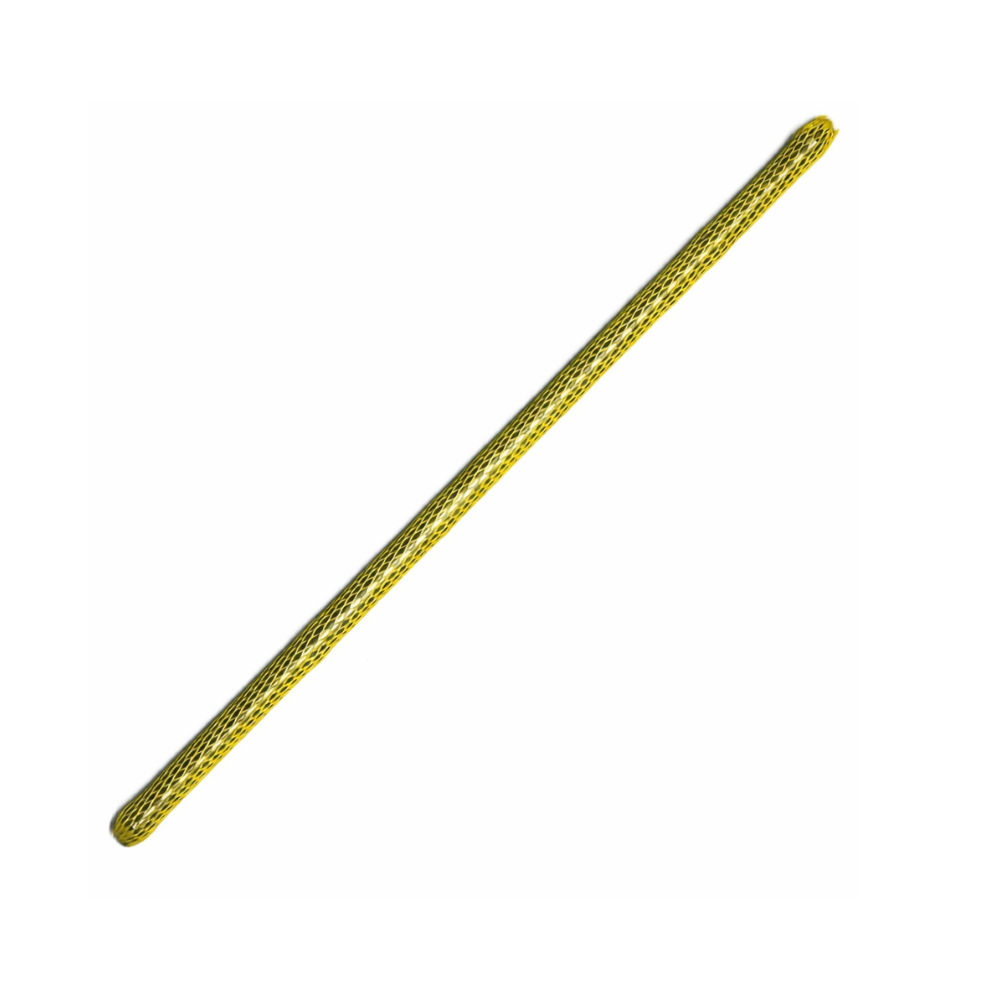
Birel ART Rear Axle 30mm x 960mm - Yellow

Birel ART Rear Axle 30x960mm (Yellow / Medium)

30mm diameter · 5mm wall · 960mm length · balanced reference option
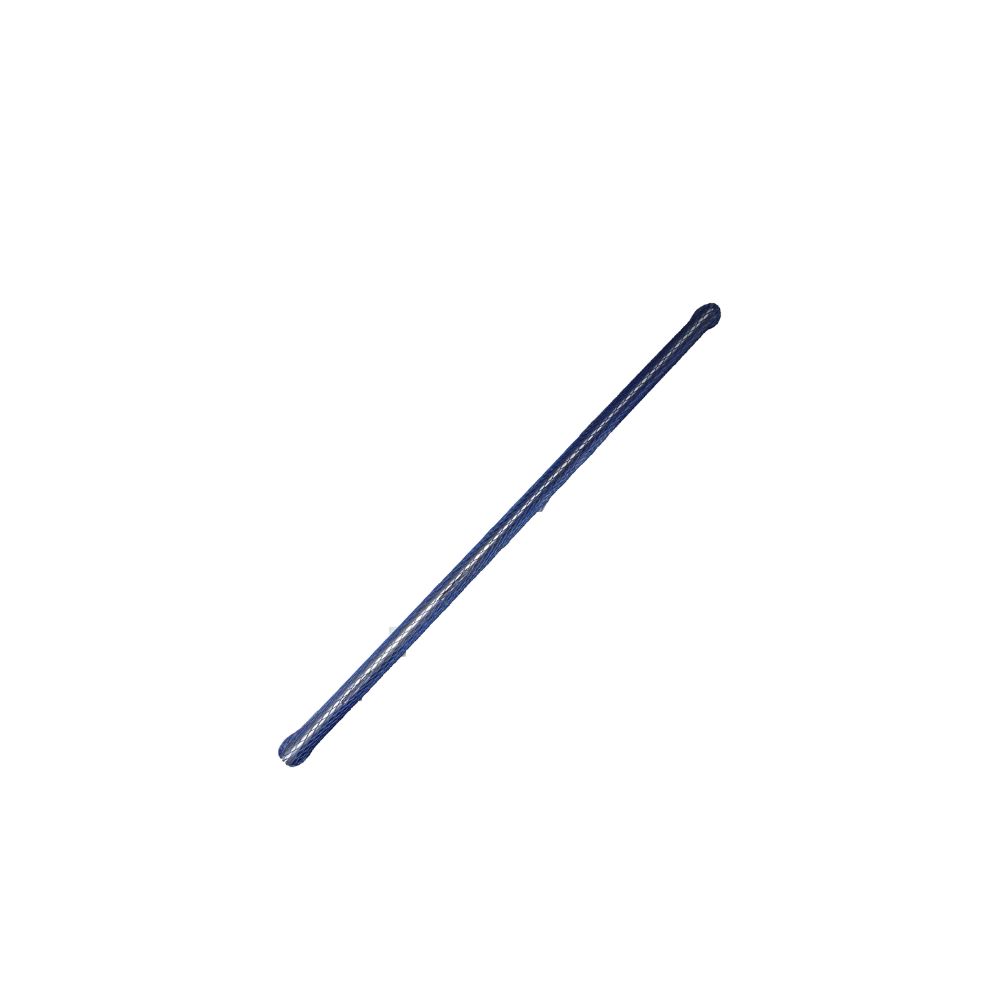
Birel ART Rear Axle 30x960mm (Blue / Soft)

30mm diameter · 5mm wall · 960mm length · more flex than the Yellow version
Check the axle currently fitted to your kart before ordering either one. Matching dimensions do not mean both stiffness options will suit the same track condition or driver.

Test a Different Axle Without Losing Your Baseline

Use this process during a practice session:
The fastest single lap doesn’t always identify the better axle. A setup that stays consistent through a full race is often more useful than one that produces one quick lap and then starts to bind.

Common Rear Axle Selection Mistakes

Buying by Color

Color codes don’t transfer between brands. Use the manufacturer’s stiffness chart and exact part number.

Changing Several Parts at Once

An axle, hub, rear-width, and tire-pressure change made at the same time gives you no way to identify which adjustment actually helped.

Using an Axle to Hide a Mechanical Problem

A bent axle, damaged bearing, twisted chassis, loose cassette, cracked seat mount, or mismatched tire can make the kart behave inconsistently. Repair the fault before tuning stiffness.

Copying Another Racer's Setup

A setup from another driver may use a different chassis year, tire compound, engine class, seat position, or driving style. Their axle choice is useful information, not a direct instruction for your kart.

Frequently Asked Questions About Go Kart Rear Axle Stiffness

Axle stiffness doesn’t directly change the kart’s gear ratio or engine speed. A poor axle match can reduce speed by making the rear tires scrub in the corner or by weakening acceleration onto the straight.

A stiffness rating describes how the axle responds under load. It’s not a guarantee that the axle will survive curb strikes or contact. Inspect any axle after a hard impact, regardless of its stiffness.

A standard axle and one adjacent option covers many club-racing needs. Experienced teams may carry soft, medium, and hard versions when the chassis offers all three and track grip changes heavily during an event.

A bent axle can create vibration, brake-disc movement, chain misalignment, and different handling in left and right turns. Replace it before comparing setup changes.

No. Loosening or removing the center-bearing hardware changes how the rear assembly flexes, but it doesn’t change the axle material or stiffness rating. Only use that adjustment when the chassis manufacturer allows it.
Find the Correct Racing Go Kart Axle

Start with your chassis specifications, current axle code, and a clear description of the handling problem. Those details are far more useful than ordering the softest or hardest option based on track temperature alone. Browse the available racing go kart axles from Fast Kart Parts and compare diameter, wall thickness, length, brand, and stiffness rating before purchasing.